The Unwritten Oath: On Mentorship and Quiet Leadership
Entry No. 26
Dear Faithful Companion,
There are few moments in one’s journey more sobering than realizing someone looks up to you. It seldom arrives with announcement. More often, it slips quietly into your awareness—a casual word of thanks, a repeated turn of phrase, or a younger officer echoing the tone you didn’t know you’d set. These moments tend to find us when we are least prepared for them. And when they do, they land like a silent vow: Do not let them down.
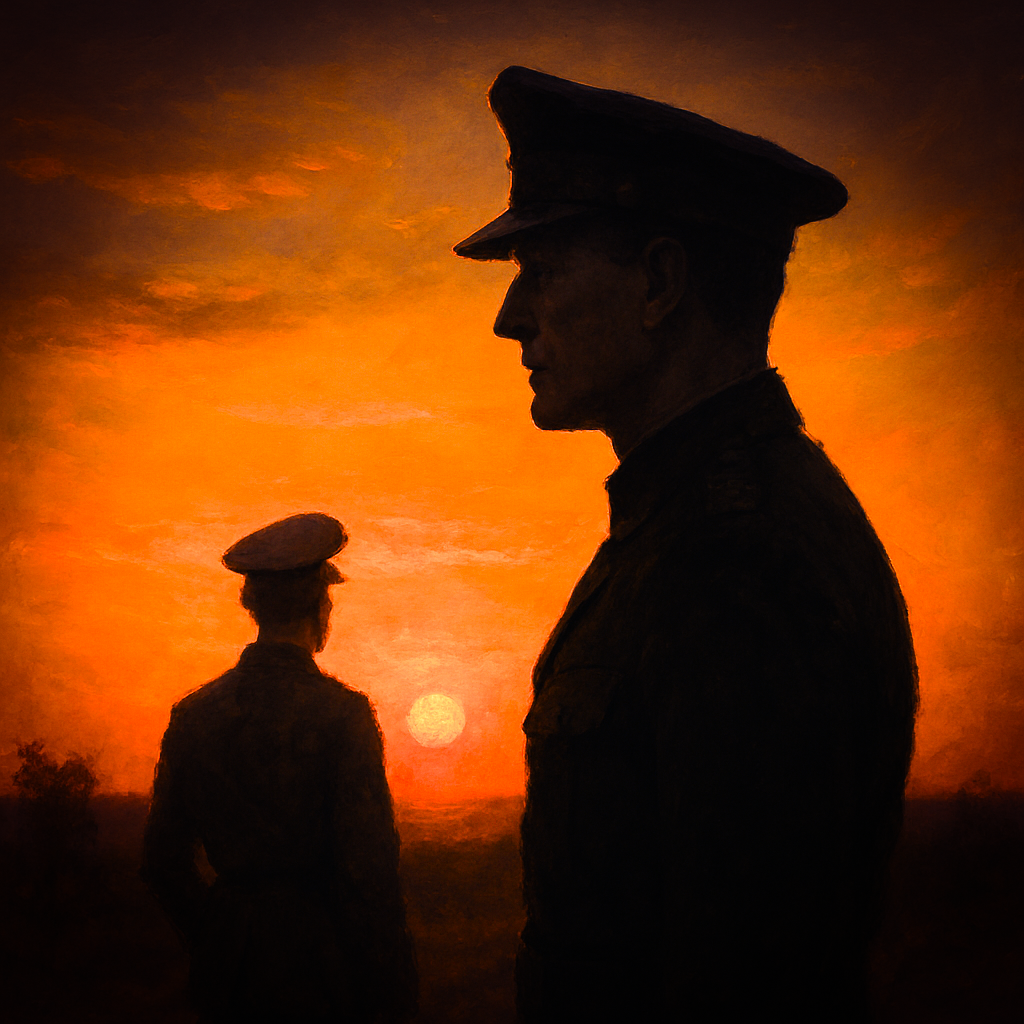
It’s a peculiar kind of ache—the pride in knowing you’ve become a compass for someone, and the quiet fear that you may one day point them the wrong way. To be looked up to is not to be applauded—it is to be held to account. It means that even your unguarded moments speak, even your silence teaches. And it demands that your conduct—especially when no one is watching—is worthy of the trust it quietly carries. It is not only in the deliberate exchanges that leadership is measured, but in the daily bearing of oneself. When you are respected, you are also studied. This means the uniform must always be squared away, faults must not be passed over, and self-discipline must be sharper than most would guess. Sometimes, it means being hard on yourself—not out of vanity, but because others must see that standards are real, lived, and never optional. In this way, leadership becomes a posture as much as a practice.
Throughout my life, I have encountered mentors who lived this kind of leadership. They moved with grace, spoke with precision, and possessed a calm that stilled the air around them. You knew—without them needing to say it—that they were in control. Their dignity did not demand obedience; it invited respect. But what made them truly remarkable was their willingness to offer their hard-earned time. They would sit with you—not to command, but to explain. They would share the why behind decisions, the tactics that made you better, and the reasoning that sharpened your understanding. They invested in your development not out of obligation, but because they believed in passing on what had been hard-won. Some I still turn to for guidance; others have passed through my life like steady ships on a dark horizon. But each one left behind a wake I have tried, in my own way, to follow.
To lead gently is to possess a strength deeper than bravado. It is to be the calm in the fiercest storm—even when you are just as uncertain as those beside you. It is restraint when provoked, silence when tempted, action when it matters. Gentle leadership is knowing when to take the helm and when to let another grow by taking it from you. It is humility in your bearing, even when your rank could demand deference.
Mentorship, to me, is both a privilege and a duty. To be sought out for counsel is to be given a sacred trust. And to accept that trust without care, or with poor advice, is to fail your post. As Epictetus reminds us, “Don’t explain your philosophy. Embody it.” The lessons we give are not spoken—they are lived. A true mentor is not the one with the most answers, but the one whose life offers direction, even in silence.
History offers us no better image of this than Lucius Quinctius Cincinnatus, a Roman farmer summoned from his plough to defend the republic. In 458 BC, as Rome teetered under threat, the Senate granted Cincinnatus absolute power as dictator—a perilous temptation for any man. But Cincinnatus did what few leaders have ever done: he led with resolve, repelled the enemy, and when the danger passed, he relinquished power and returned to his farm. He did not cling to command. He did not seek reward. He fulfilled the duty, then stepped aside—quietly, honourably. His greatness lay not just in what he achieved, but in what he refused to become. And in doing so, he became a model for citizen-leadership for centuries to come.
There is a quiet dignity in such service. One that does not seek legacy, but often earns it. As both an officer and a gentleman, I have come to believe that the best leaders are not always the ones in front. They are often the steady hand behind the curtain—the ones who shape character, uphold standards, and guide others without fanfare. They are the ones who will stand beside you in the moments you need them most—not ahead to overshadow, but at your flank, where support matters more than spectacle. They may not roll up their sleeves to do the labour, but they know what to offer to get you through it: perspective, presence, a well-timed word. Their legacies are not medals or titles, but people—individuals they have uplifted, steadied, and quietly prepared to take up the mantle next.
True leadership is not about being remembered. It is about leaving others stronger in your wake.
And so I offer, with reflection and reverence, this quiet covenant—The Unwritten Oath—for those who lead not for recognition, but because it is the right thing to do.
The Unwritten Oath
I do not seek applause, nor shall I shy from duty.
I shall carry myself with calm and discipline,
Even when the world stirs with unrest.
I shall speak with clarity, but never with cruelty;
Act with purpose, but never with pride.
I shall offer guidance when it is sought,
And example when no one asks.
I shall remember that to be followed is to be trusted—
And to be trusted is to be held to a higher standard.
I shall uphold the quiet burden of leadership,
Not in pursuit of recognition,
But in honour of those who once led me with grace.
In all things, I shall strive to be steady,
Measured in thought, firm in principle,
And true in conduct.
This I vow—
Not for reward, but because it is right.
Verbum Ultimum
In a world fond of volume, it is often stillness that carries the greatest weight. Titles fade. Applause quiets. But the steady influence of a quiet leader endures in those they shaped—without ever needing credit. Let others chase spotlight; we were forged for service. Let others command attention; we command ourselves. May we lead not by shouting commands, but by standing firm, walking true, and bearing—without complaint—the honour of being someone others trust to follow. And if we were ever left without a guide when we needed one, let that absence become the reason we now stand for someone else. Be the mentor you once needed. Be the quiet strength someone is searching for now.
Until next we meet, with ink as my witness and virtue as my guide.
JCB